

Snide remark or eye roll at the music playing? Children pick up on this. Are they YOUR opinions which reduce music appreciation and impact feelings?
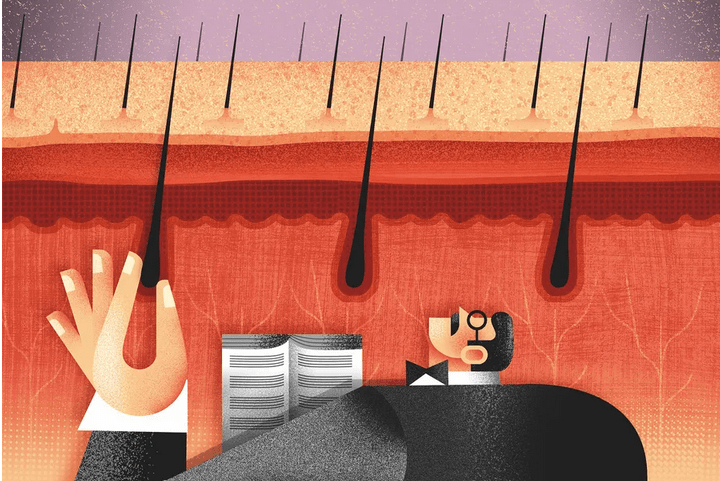
Maria Corte Maidagan (Illustrator)
From reading article ‘Thrills and chills,’ (by Tom Service in the BBC Music June edition), I started exploring seriously implicating cognitive directness in music education.
What is discussed by the author is the science behind goosebump reactions to music. (Worth a read and accessible here: https://www.classical-music.com/articles/why-music-gives-us-goosebumps)
He quotes neuroscientist, Diana Omigie. Being the person that I am I ended up reading her thesis to glean exactly what the news is on neuroscience and music these days! Dopamine is a hot topic. As an educator keen to learn more about ADHD learners this gets my attention. I also learn a new word. Dopaminergic. (Takes note of Oxford dictionary definition)


‘An interesting question then would be what drives this dopamine mediation.’ Diana Omigie.
Another point of interest which I couldn’t help but deliberate on when reading her thesis, was this;
‘It is plausible that those individuals having greater exposure to music in the presence of friends and family would have built up more positive associations with music* than those individuals whose musical experiences are limited to contexts deemed less enjoyable in general (e.g. imposed music in public places).’
*Emphasis mine
[Thesis quotes: Studies into the cognitive and neural basis of congenital amusia,’ Diana Omigie, Goldsmiths, University of London, 2012]. Accessible here: https://research.gold.ac.uk/id/eprint/8014/1/Psychology_thesis_Omigie.pdf
So, does our nurtured music exposure affect us differently depending on the genre which we were exposed to as children? Something I had not really considered in much depth before but is seems highly conceivable that nurture impacts on adults attending music concerts later in their life, as to what their ‘home’ environment was as a child and of course their associations with music being either positive or negative. Additionally, which genres of music were or were not positive. ‘Home’ cannot be taken for granted either. What we visualise or plan to teach assuming a ‘happy home’ as a neutral family listening to music together contentedly is not an accurate representation of childhood background experiences at large.
This is a serious implication on music educators! I take an even greater responsibility for exposing children to various examples and genres of music and how my attitude and teaching style must align positively (and hopefully not in a biased manner) so that we are not producing biased adults who dislike the same types of music that their educators do/did (and/or family members as well).
We talk of being open-minded adults eager to be suitable role models to youngsters. Locally and perhaps globally there is a growing expectation of change from politicians and without getting into political waters, I mention this in terms of change. We carry responsibility in our daily actions and suggestive language that forms opinions and stereotypes in future generations. From little ‘off-hand’ remarks, to eye rolls at certain music selections, there is significance to labeling music as this or that without presenting it as ‘is.’ Parents are not the only ones to affect music accessibility, positive association and impact. Music teachers, tutors, facilitators all carry that responsibility one way or another.
So, in conclusion, the goosebumps are great but if only a small group ever experience this as adults listening to music, have we really done our job?!
#smmusictuition #smmusictutor
 SM Music Tuition
One reply to “Owning your stereotyping music?”